
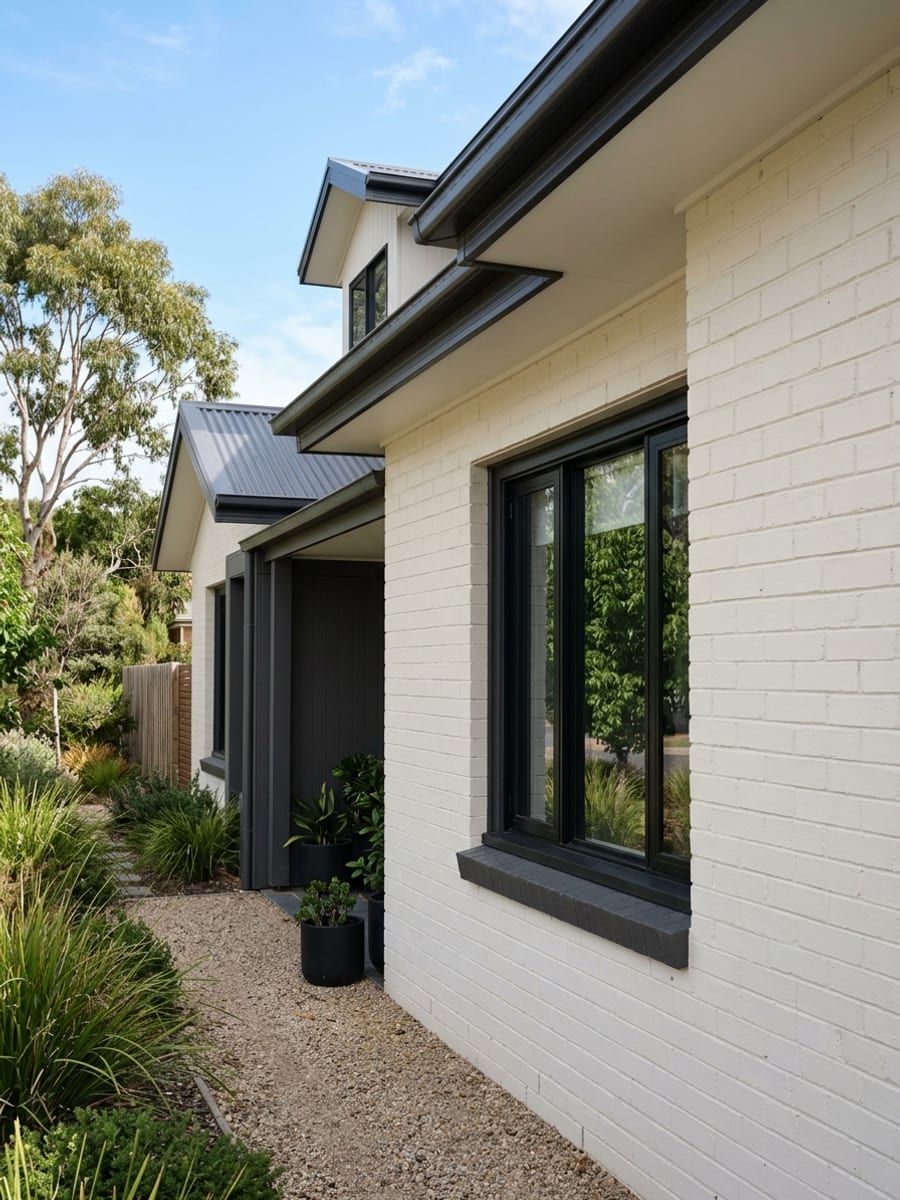
Painting bare brick changes a house permanently. Stripping paint off brick later is expensive and never quite returns the original look, so it is a decision worth making slowly and a job worth preparing properly. Done deliberately, painted brick modernises a dated facade in a way few other jobs can. Done on impulse, it is one of the most common renovation regrets. Here is what to think through first.
Why is painting brick considered one-way?
Brick is porous, and paint bonds into its surface rather than sitting on top of it. Once coated, the original face of the brick is gone for practical purposes. Removal methods exist, from chemical stripping to abrasive blasting, but they are slow, costly and rough on the brick and mortar, and the result is never the crisp original face.
That permanence is not a reason to avoid the job. Plenty of Geelong's 1970s and 80s brick veneers look genuinely transformed in a modern colour. It is a reason to be sure. If you love the brick as it is, keep it. If you have always disliked it, painting is a legitimate and lasting answer, not a compromise.
How is bare brick actually painted?
The sequence starts with cleaning. Dirt, cobwebs, efflorescence (the white salty bloom that migrates out of brickwork) and any moss all come off, and the wall dries fully. Efflorescence in particular has to be treated, not just rinsed, because it signals moisture moving through the wall, and painting over it pushes the problem behind the film.
Then the sealer or masonry primer. Bare brick drinks paint, and without a sealer the first coat disappears into the wall and the finish comes out patchy and weak. After sealing, two coats of masonry paint go on, brushed, rolled or sprayed so the mortar joints are fully covered. The joints are where thin jobs show first.
Why does breathability matter so much?
Exterior brick needs a coating that sheds rain while letting water vapour escape. Brick walls always hold some moisture, from rain, from the ground, from condensation. A non-breathable film traps that moisture behind itself, and the pressure pushes the paint off in blisters, sometimes within the first winter.
Quality masonry paints are formulated for exactly this balance. It is one of the few areas where the product choice is not a preference but a technical requirement, and it should be named in the quote.
What about the mortar?
Paint does not fix mortar. Cracked, fretting or missing mortar gets repointed before coating, both because it looks poor under paint and because open joints are a water path into the wall. On older homes the repointing can be a meaningful part of the job, and it belongs in the scope, not as a surprise extra.
Interior feature brick is a different job
Painting an interior brick wall is about finish, not weather. The preparation is lighter: a good clean, attention to any damp source, then sealing, because bare interior brick absorbs paint just as eagerly as exterior. Flat finishes keep the natural texture look and hide imperfections. Low sheen wipes clean more easily and suits kitchens and living areas.
The same one-way logic applies indoors. Painted feature brick is a strong look in the right room and a tiring one in the wrong room, so test the idea with samples and photos before committing.
Which colours work on painted brick?
Light neutrals dominate painted brick for practical reasons as much as fashion. They show less efflorescence staining if moisture ever does move through the wall, they fade more evenly, and they keep wall temperatures down on sun-exposed elevations. Dark colours on brick look striking, but they absorb heat, and heat drives both fading and the thermal movement that stresses any coating.
Sheen matters less on brick than on timber, because the texture of the brick and joints scatters light anyway. A low-sheen masonry finish suits almost every brick house and hides the natural variation in the surface far better than anything glossier.
How do you maintain painted brick?
The maintenance is simple and mostly hands-off: a wash every couple of years to keep dirt and organic growth from sitting on the film, attention to any new crack in mortar or coating so water stays outside, and realistic expectations about the base course. The bottom rows of brick, nearest the garden beds, paths and sprinkler overspray, work the hardest and will always be the first area to need a touch-up. Keeping soil, mulch and constant wetting away from the wall is the cheapest maintenance there is.
The honest checklist before you book
Walk the wall and answer three things. Is the mortar sound, or does it need work first? Is there any active damp or efflorescence to solve at the source rather than coat over? And are you sure about losing the brick look, having lived with it? Bring those answers to the quote and the job will be scoped properly, the way our brick wall painting service approaches every brick job:, priced properly and finished the way you pictured it.