
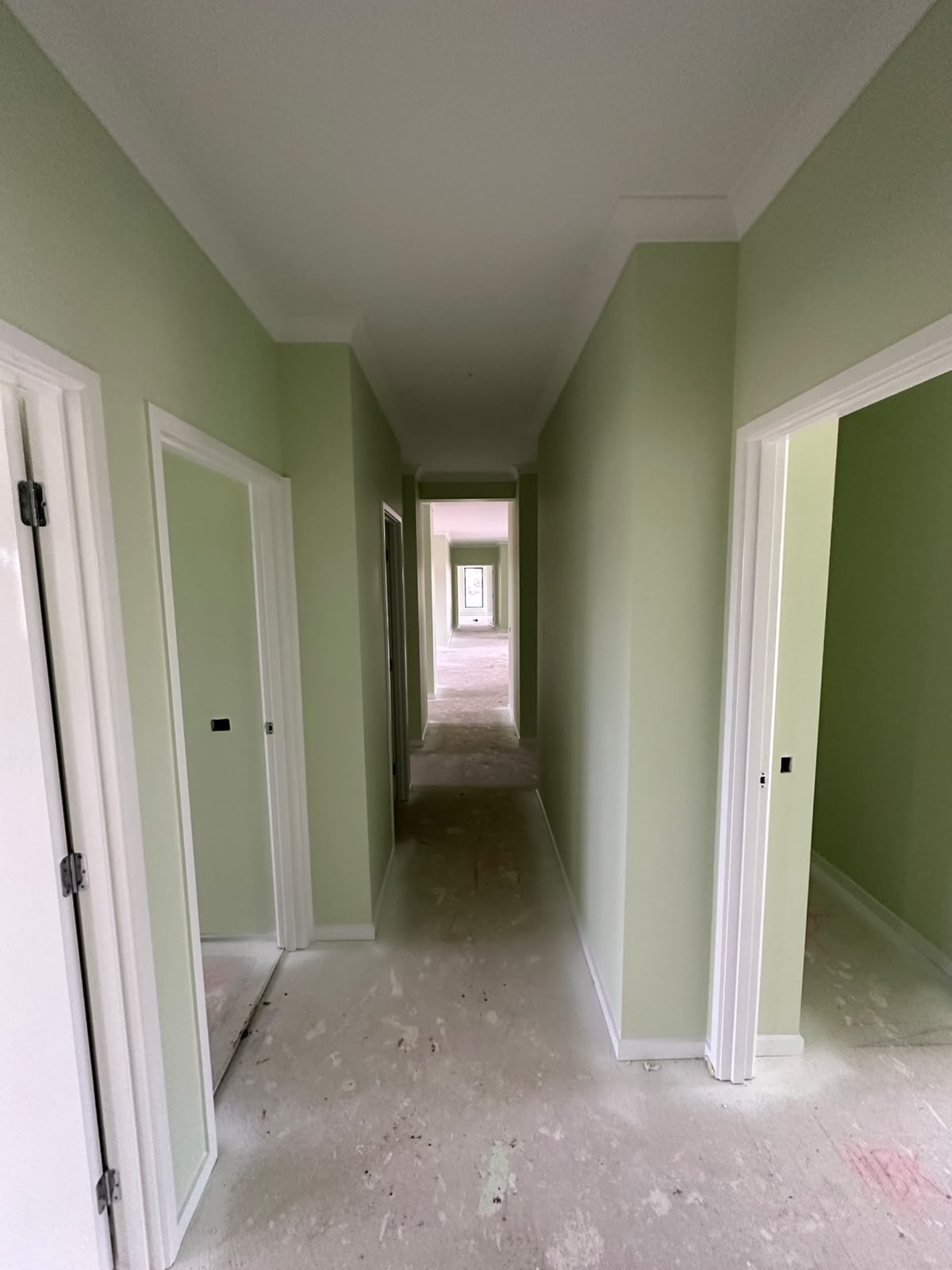
The honest answer is that preparation and drying time decide the schedule more than the painting does. Two coats go on in hours. The washing, scraping, filling, sanding, masking and waiting around those coats are where the days go. Here is what typical jobs look like once all of it is counted properly.
How long does a single room take?
One room in reasonable condition is usually a day or two. Furniture moves to the middle and gets covered, floors are protected, holes are filled and sanded, edges are cut in, and two coats are rolled with drying time between them. The painting itself is the fast part.
What stretches a room is condition and colour. Walls that need real repair, heavy colours over light walls (or the reverse), and rooms with lots of trim, windows and doors all add time. A bedroom with four plain walls is not the same day as a lounge with a bay window and picture rails.
How long does a full interior take?
A whole-house interior runs across several days to a couple of weeks depending on size, how much furniture is in place and whether ceilings and trim are included. Occupied homes are worked room by room so the house stays liveable: bedrooms done in a sequence that always leaves you somewhere to sleep, wet areas finished fast enough to return to service.
Empty homes run faster. A new build or a pre-sale repaint with no furniture can be sprayed, which compresses the coating time dramatically, though the masking still takes its share. If you are timing an interior around a move, a sale or new flooring, mention it at the quote, because the sequence can be planned around the deadline.
How long does a full exterior take?
Exteriors take longer than interiors of the same size because the preparation is heavier. The pressure wash comes first, then drying time, then scraping, sanding, gap filling and priming before the top coats. A typical weatherboard or rendered home runs around a week. Repairs, a second storey, difficult access or a house in poor condition push it longer.
Weather is the variable no one controls. Exterior coatings need dry surfaces and reasonable temperatures, so a showery week stretches the calendar even though the working hours stay the same. Autumn and spring are the reliable seasons around Geelong; winter work happens, just with more flexibility.
How long do roofs and render take?
Roof painting runs cleaning, repairs, then primer and membrane coats with drying between each stage, usually several days of suitable weather. Rain stops roof work entirely, both for safety and because membranes need dry conditions to cure.
New render or texture coating adds a step most people forget: curing. Fresh render has to cure before it can be painted, and that wait is measured in weeks, not days. Painting uncured render traps moisture and ruins both the render and the paint. If you are building or re-rendering, the painting date is set by the render, not the painter.
What should the quote tell you about timing?
Every quote we write includes an expected timeframe, broken into the stages that make it up. That breakdown is worth reading, because it shows whether the painter has counted the drying and curing time or just the brush time. Exterior dates come with the caveat that weather can shift them, and when it does, you should hear about it early, not on the morning the crew was due.
What can you do to keep the job moving?
Homeowners control more of the schedule than they realise. Deciding colours before the start date is the big one: a colour changed mid-job can cost a day and a revisit. Clearing small items, curtains and wall hangings before the crew arrives saves the first morning. Arranging pet and access plans early avoids the daily negotiation.
For exteriors, trimming plants back from the walls and moving cars, pots and furniture clear of the work zone lets the washing start immediately. None of this is expected of you, but every hour saved on logistics is an hour spent on the walls.
Can a job be done faster if you are in a rush?
Sometimes, with limits. Stages can be sequenced tightly and extra hands can be added to preparation and coating. What cannot be rushed is chemistry: drying between coats, curing of render and fillers, and dry weather for exterior work. A promise to beat those limits is a promise to compromise the finish, and it should be heard that way.
The short version: ask how long, ask what the number includes, and treat any quote that skips the drying time as optimistic rather than fast.