
If your home is in Torquay, Jan Juc, Ocean Grove, Queenscliff, Portarlington, St Leonards or down the Great Ocean Road at Lorne, your paint job lives a harder life than the same paint job in suburban Geelong. Salt air is the reason, and it changes how an exterior should be prepared, coated and maintained.
What does salt air actually do to paint?
Salt rides the wind inland and settles on every exterior surface as a fine film. Left there, it does three kinds of damage. It holds moisture against the coating, which softens cheaper paints and feeds mould. It works into tiny breaks in the film and corrodes what is underneath, which is why coastal homes get rust bleed around nail heads and fixings. And it combines with the strong coastal UV to chalk and fade the surface faster than the same paint would chalk inland.
South and west elevations, the sides that cop the prevailing weather, usually show it first. If one side of your house looks five years older than the other, that is exposure, not a bad batch of paint.
How does preparation change on the coast?
Preparation on a coastal home starts with getting the salt off. A proper pressure wash, sometimes with a mould treatment on the shaded sides, is not optional. Painting over salt film is painting over a layer the new coating cannot grip, and it is one of the main reasons cheap coastal repaints peel early.
After the wash, the usual suspects get more attention than they would inland: any rust staining around fixings, chalky patches that need binding back, and bare timber that needs a quality primer. Weatherboard homes along the coast often need more scraping and sanding on the weather side than the sheltered side, and the quote should reflect that difference rather than assume the whole house is in the same condition.
Which coatings handle coastal conditions?
Exterior coatings for coastal use are chosen for flexibility, UV resistance and how well they shed dirt and salt. A quality 100 percent acrylic exterior paint is the usual answer for walls, applied over the right primer for the surface. Gloss and semi-gloss finishes shed salt and dirt more easily than flat finishes, which is why trim and weatherboards often suit a bit of sheen.
Roofs on the coast work even harder. Metal roofs near the sea need their screws and any rust spots treated before coating, and the membrane itself has to be rated for the exposure. The preparation sequence, clean, treat, prime, then two membrane coats, matters more within a kilometre of the water than anywhere else.
How often should a coastal home be washed?
A fresh water wash every year or two is the cheapest maintenance a coastal home can get. It removes the salt before the salt removes the coating. Homes right on the exposure, like beachfront Torquay or the open Bellarine foreshore, benefit from a yearly wash. Homes a few streets back can stretch it to two.
The wash is not cosmetic. A coating that is kept clean routinely outlasts the same coating left dirty, sometimes by years. It is also the moment small problems get spotted: a starting crack in render, a lifting board edge, early rust at a fixing. Caught early, those are small jobs. Left under salt, they become preparation-heavy ones.
Does salt affect more than the paint?
Yes, and the extras matter when scoping a coastal job. Metal fixings, gutter brackets, window frames and flyscreens all corrode faster near the water, and they often need attention at the same time as the walls. Aluminium window frames on older coastal homes frequently need a proper clean and sometimes refinishing. Gutters and downpipes rust from the inside out when salt and leaf litter sit in them, so a repaint is a natural moment to have them cleared and checked.
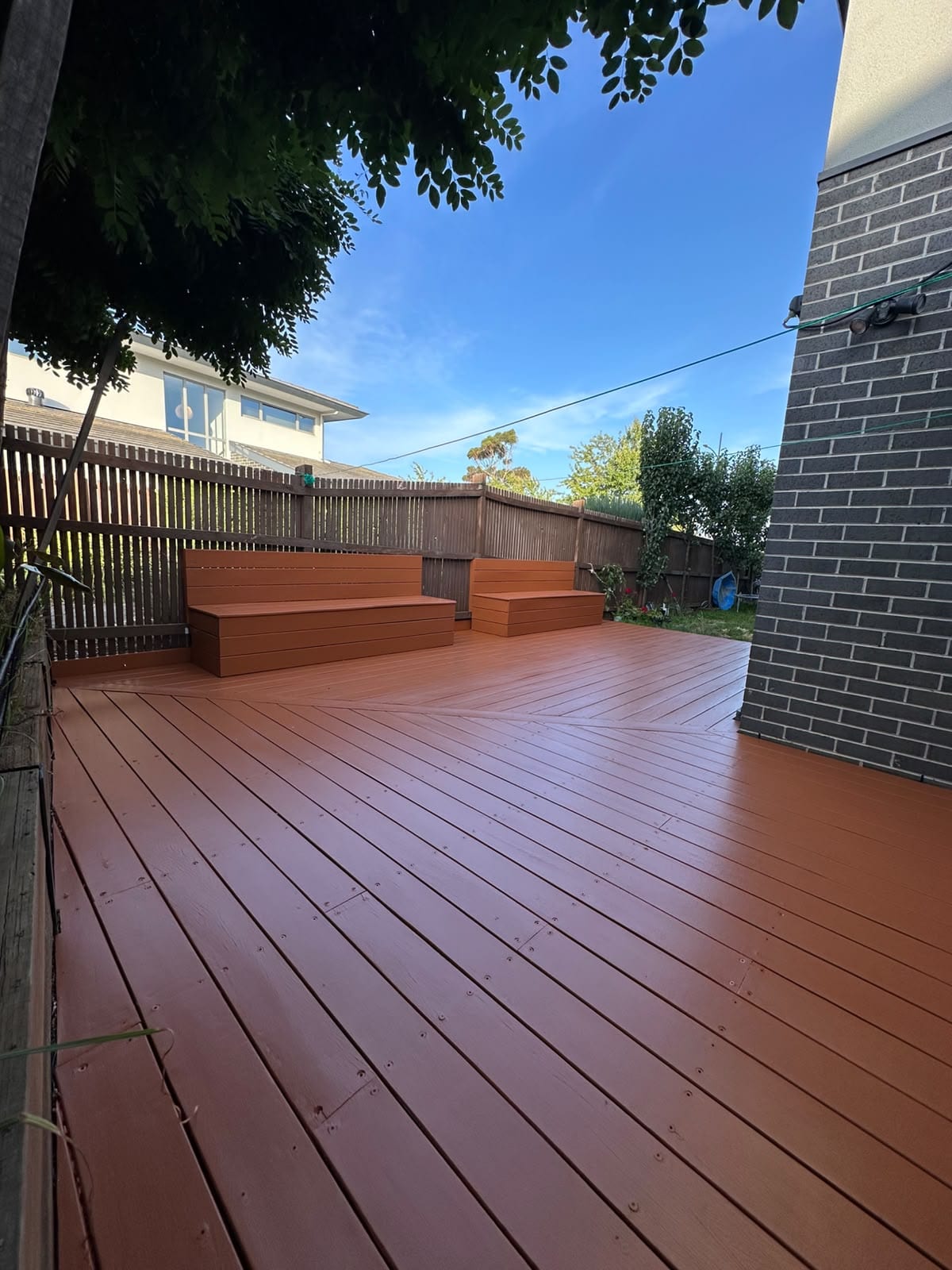
Timber decks, fences and outdoor furniture near the coast weather faster too, going grey and splitting sooner than the same timber inland. They are separate jobs from the house paint, but they respond to the same logic: clean properly, then protect with the right product for the exposure.
When is the best time to paint on the coast?
Wind is the coastal scheduling factor. Spray work in particular needs calm days, and the coast serves up fewer of them. Autumn and late spring often give the best run of mild, calm, dry weather for exterior work, and a good painter will juggle elevations around the day's wind rather than fight it.
The weatherboard painting and roof painting pages cover the service detail. The short version: coastal paint jobs are won or lost in the wash, the primer and the product choice. Done properly for the exposure, a coastal repaint holds up well. Done like an inland job, it looks tired far sooner than it should.