Every exterior repaint starts with a wash, and it is not about making the place look tidy for the photos. Dirt, chalk, mould, spider webs and salt film all sit between the old surface and the new paint, and paint does not stick to any of them. The wash is the first coat, in every sense that matters.
What does the wash actually remove?
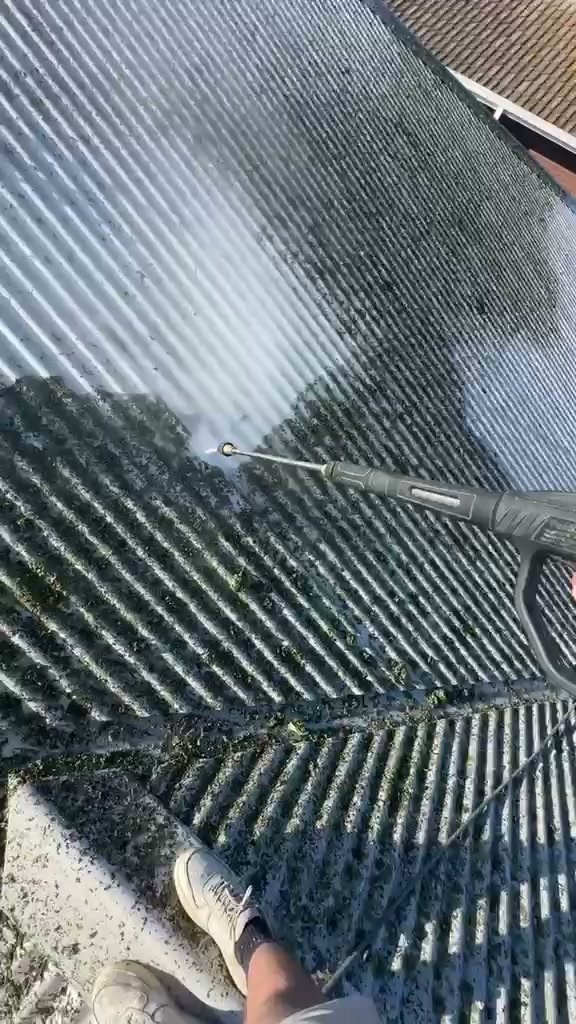
Geelong and Surf Coast homes collect a specific mixture. Salt film rides in from the bay and the ocean and settles on every surface. Mould and mildew colonise the shaded south side and anywhere trees keep the wall damp. Dust works into the grain of weatherboards and the texture of render. Old paint chalks, leaving a powder that rubs off on your hand. Birds, spiders and wind-blown debris add their share.
Each of these is a bond-breaker. Paint applied over chalk or dust sticks to the chalk and dust, not the wall, and it lets go early, usually within a couple of summers, often in sheets. A proper pressure wash strips the whole mixture off in one pass and gives the new coating a surface it can actually grip.
How is pressure matched to the surface?
The washer is a tool, not a fire hose, and the setting changes with the material. Render handles moderate pressure but can be scarred by too much, leaving lines that show through the finish. Weatherboards take a careful fan at lower pressure: too much tears the timber grain and drives water behind the boards. Brick is the most forgiving, though old mortar still deserves respect. Roofs get cleaned at pressures suited to the tile or metal, with runoff managed so gutters and stormwater drains are not flooded with debris.
Mouldy areas get a treatment as part of the wash, because killing the mould is the point, not just rinsing off what is visible. Mould left alive under new paint grows through it.
How long before painting can start?
The wash and the paint are not the same day. Surfaces need to dry properly before any coating goes on, and that wait ranges from a day or two in warm weather to longer in winter or on shaded walls. Timber in particular holds moisture, and painting over damp timber traps it, which blisters the new film from behind.
This is why exterior quotes carry a weather caveat. A wet week does not just delay the painting, it delays the washing, and then the drying after the washing.
Does it work as a standalone job?
Plenty of bookings are just the wash, with no painting planned at all. Driveways, paths, patios, fences and roofs all benefit from a proper clean, and the transformation on concrete especially is dramatic. Our pressure washing service works both ways: first stage of a repaint or a standalone clean. It is one of the most common pre-sale jobs we see: a day of washing lifts the whole presentation of a property for a fraction of the cost of any other improvement.
It also works as maintenance. A home washed every year or two keeps its coating longer, because the film of salt and grime that degrades paint never gets the chance to build up. Whether it is the first stage of a repaint or a job on its own, the logic is the same: clean surfaces last longer.
Can you just pressure wash it yourself?
Hire machines make it tempting, and for a driveway it can be a reasonable weekend job. The risks show up on the house itself. Too much pressure forces water behind weatherboards and into wall cavities, where it sits and causes exactly the moisture problems paint is meant to prevent. Held too close, the jet etches concrete, scars render and tears timber grain, and every one of those marks shows through the finish coat.
Streaking is the other common DIY result: overlapping passes at uneven distance leave zebra stripes across the wall that only fully disappear under new paint, and sometimes not even then. If the wash is the first stage of a painting job, it belongs in the painter's hands, because the standard it is washed to is the standard the coating will perform to.
The takeaway
Pressure washing looks like the simple part of an exterior job, and it is the part everything else depends on. Whether it is booked as preparation for painting or as a standalone clean, the measure of the job is the same: every surface free of chalk, mould, salt and grime, no damage from the process, and enough drying time before any coating follows.