
A tired roof makes the whole house look tired, and when it does, the fork in the road is always the same: coat it or replace it. The price difference is large, so it is worth understanding what each option actually buys before deciding.
What does roof painting actually involve?
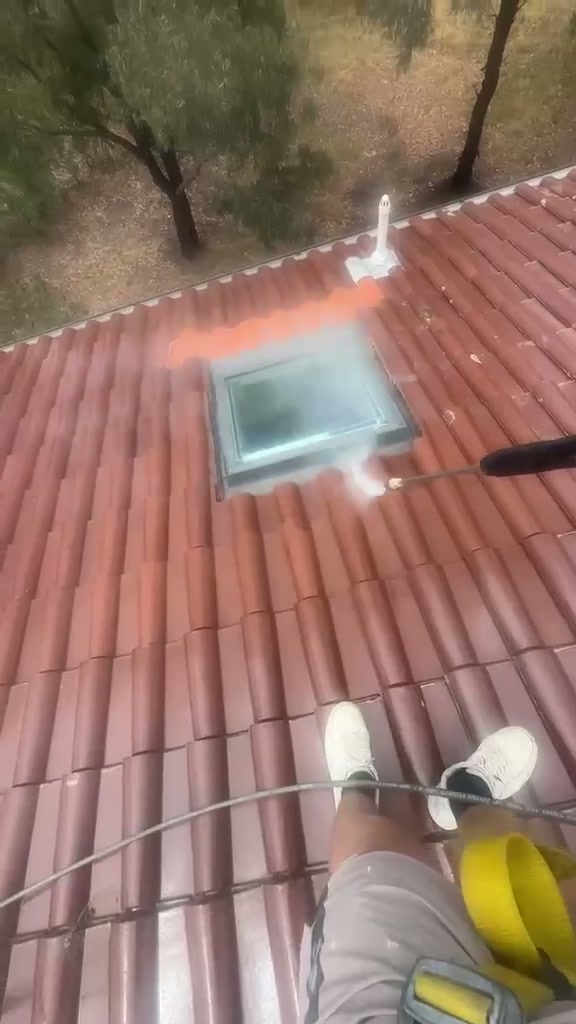
Roof painting, done properly, is closer to a restoration than a paint job. The sequence starts with a high-pressure clean to strip off lichen, moss, dirt and chalked old coating. Then repairs: broken tiles swapped, ridge caps repointed where the mortar has cracked, rusted screws replaced on metal roofs, any rust treated. Only then does the coating go on, a primer suited to the roof material followed by two coats of roof membrane.
The membrane is not house paint. Roof membranes are flexible, UV-stable coatings made for the punishment a roof takes, and they are what gives the job its years.
When is painting the right call?
Painting is the right call when the roof structure is sound and the problem is appearance and surface protection. Faded tiles with the colour worn back, a metal roof with chalking and surface rust at the screws, lichen taking hold on the shaded south side: all of these respond well to clean, repair and coat. The roof looks new from the street, the surface is sealed, and the job costs a fraction of replacement. Our roof painting service page walks through what is included.
Age alone is not the deciding factor. Plenty of thirty and forty-year-old tile roofs around Geelong's older suburbs are structurally fine and coat up beautifully.
When is replacement the honest answer?
Replacement enters the conversation when the roof is failing, not just fading. Concrete tiles that have gone soft and porous, crumbling at the edges or absorbing water like a sponge. Widespread rust-through on a metal roof, not just surface rust at fixings. Ongoing leaks traced to failing sarking or structure, not a few cracked tiles. A sagging roof line, which points to structural issues no coating will touch.
A painter who tells you every roof can be coated is selling. A roofer who tells you every roof needs replacing is also selling. The truth is usually visible from a ladder: sound tiles or sheets with a tired surface get coated, failing material gets replaced.
Tile and metal roofs differ
Concrete and terracotta tiles take membrane coatings well once cleaned and repaired. Concrete tiles in particular are porous, so the primer stage matters. Terracotta is denser and needs its own preparation approach, and glazed terracotta is sometimes better left uncoated.
Metal roofs are about rust management. Surface rust and old screws are treated and replaced, then a metal primer goes down before the membrane. Rust-through is the line: once sheets are perforated, replacement of at least those sheets is the honest fix.
How long does a coated roof last?
A properly prepared roof with two coats of quality membrane typically holds its colour and protection for around ten years, sometimes more inland, sometimes a little less in harsh coastal exposure. Preparation and film thickness decide the lifespan, which is why the cleaning and repair stages are where corners get cut and where cheap jobs fail early.
What happens on the day?
A roof job runs in a set order, and knowing it helps you read a quote. Day one is usually the clean: the whole roof pressure washed, with the run-off managed so gutters and stormwater are not flooded with debris. Repairs follow, and on tile roofs this is when ridge cap repointing happens, grinding out cracked mortar and repointing with a flexible compound that moves with the roof instead of cracking like the old rigid mortar did. Masking comes next, covering solar panels, skylights, wall tops and anything else that should not see overspray. Then the primer, then the two membrane coats, with drying time between each stage.
Weather can stretch that sequence. Membrane needs dry conditions to cure, so a showery week can push a three-day job across five. That is normal on roofs, and a quote that promises a fixed day count without a weather caveat is optimistic.
The street appeal factor
One honest note on value: the roof is up to 40 percent of what you see from the street. A fresh membrane in a modern colour changes the whole look of a house, which is why roof coating is one of the most common pre-sale jobs around Geelong. If sale is the goal, coating almost always beats replacing on return, provided the roof is sound enough to take it.
If you are weighing up your own roof, the first step is an inspection that tells you plainly which side of the line it sits on. From there the quotes make sense.